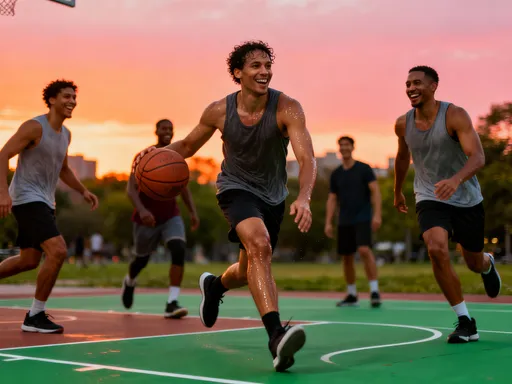
How Ball Sports Transformed My Fitness Without the Gym Grind
What if staying fit didn’t mean endless treadmill sessions or heavy weights? For years, I chased workouts that felt like chores—until I rediscovered ball sports. From casual pickup games to structured play, moving with a ball changed everything. It boosted my stamina, coordination, and joy in exercise. This isn’t just play—it’s a powerful, science-backed fitness path. Let’s explore how something as simple as a ball can redefine your routine.
The Hidden Power of Ball Sports in Modern Fitness
Ball sports are often seen as recreational pastimes, but beneath the surface, they offer a dynamic and comprehensive form of physical training. Unlike traditional gym workouts that isolate muscle groups, ball-based activities engage the entire body through natural, functional movements. Whether it’s running to intercept a pass, jumping to block a shot, or pivoting to maintain possession, every action recruits multiple muscle systems simultaneously. This full-body engagement makes ball sports one of the most efficient ways to build strength, endurance, and coordination without stepping into a fitness center.
One of the greatest strengths of ball sports lies in their seamless integration of cardiovascular conditioning, agility, and muscular development. A single game of basketball or soccer involves sustained aerobic effort punctuated by short bursts of high-intensity sprints, jumps, and directional changes—mirroring the structure of high-intensity interval training (HIIT), which is widely recognized for improving heart health and metabolic function. These spontaneous surges in effort elevate heart rate, enhance lung capacity, and promote fat burning, all while feeling less monotonous than running on a treadmill or cycling indoors.
Yet many people abandon structured gym routines within the first few months. Studies indicate that boredom, lack of variety, and perceived exertion are primary reasons for discontinuation. In contrast, ball sports provide an inherent sense of engagement. The unpredictability of the game, the need for split-second decisions, and the social dynamics of teamwork transform exercise into an experience rather than a task. Research from the American College of Sports Medicine suggests that individuals who participate in enjoyable physical activities are up to 75% more likely to maintain them over time compared to those following rigid, repetitive regimens.
This adherence is not just about motivation—it reflects a deeper psychological shift. When movement feels meaningful and fun, the brain begins to associate physical activity with reward rather than obligation. This positive reinforcement loop supports long-term consistency, which is ultimately the cornerstone of lasting fitness. Ball sports, therefore, are not merely alternatives to gym workouts; they represent a sustainable model of lifelong wellness rooted in enjoyment and natural human movement.
Why Your Body Loves Moving With a Ball
The human body thrives on varied, reactive movement, and ball sports deliver this in abundance. At the core of their effectiveness is the demand they place on neuromuscular coordination—the intricate communication between the brain and muscles. Hand-eye coordination, reflex development, and spatial awareness are all sharpened when tracking a moving ball. Each catch, throw, or dodge requires precise timing and motor control, stimulating neural pathways that often go underused in sedentary lifestyles or routine workouts.
What sets ball sports apart is the unpredictability of motion. Unlike lifting a weight along a fixed path, a bouncing ball follows erratic trajectories, forcing the body to respond dynamically. This constant adjustment activates stabilizing muscles throughout the core, hips, and ankles, enhancing balance and joint integrity. For example, when chasing a misdirected pass in a soccer game, the body must decelerate, shift direction, and accelerate again—movements that strengthen connective tissues and improve proprioception, the body’s ability to sense its position in space.
From a cardiovascular standpoint, ball sports offer a unique blend of aerobic and anaerobic conditioning. The stop-and-go nature of play creates intermittent bursts of high effort followed by brief recovery periods, closely resembling scientifically validated HIIT protocols. These fluctuations in intensity train the heart to adapt quickly, improving both VO2 max (the maximum amount of oxygen the body can utilize during exercise) and metabolic efficiency. Over time, this leads to increased stamina, reduced resting heart rate, and better overall cardiovascular resilience.
Another advantage is the potential for low-impact engagement, depending on the sport and level of play. Activities like recreational volleyball, doubles tennis, or catch with a soft ball can provide substantial physical benefits without placing excessive strain on joints. By modifying rules—such as limiting full-speed sprints or emphasizing controlled movements—individuals can enjoy the fitness rewards of ball play while minimizing injury risk. This adaptability makes ball sports accessible to a wide range of fitness levels and age groups, reinforcing their role as inclusive and sustainable forms of exercise.
Debunking the "Just for Athletes" Myth
A common barrier to trying ball sports is the misconception that they are reserved for young, highly skilled athletes. Many adults believe they must have prior experience, elite fitness levels, or competitive drive to participate. However, this perception could not be further from the truth. Ball sports have evolved to embrace inclusivity, with countless opportunities designed specifically for beginners, older adults, and those seeking non-competitive physical activity.
Across communities, recreational leagues cater to diverse populations. Organizations such as the YMCA, local parks departments, and senior centers offer modified versions of basketball, soccer, and volleyball tailored for adults over 40. These programs prioritize safety, skill-building, and enjoyment over competition. Participants often report improved confidence, increased energy, and stronger social connections—benefits that extend well beyond physical fitness.
Real-world examples abound. Consider a woman in her early 50s who joins a weekly walking soccer group, where the rules prohibit running and emphasize passing and teamwork. Or a retired couple who take up pickleball, a low-impact paddle sport using a perforated plastic ball, and find themselves more active than they’ve been in decades. These stories reflect a growing trend: people rediscovering movement through accessible, socially supported formats that honor their current abilities while gently challenging them to improve.
The adaptability of ball sports is one of their greatest strengths. Rules can be modified—smaller fields, slower balls, reduced contact—to accommodate different skill levels and physical conditions. Equipment can be adjusted too; lighter balls, larger targets, or softer surfaces make participation safer and more enjoyable. Furthermore, many community initiatives now promote lifelong physical activity through programs like "Walk and Talk Tennis" or "Silver Sneakers Sports Circuits," which blend gentle ball play with mobility exercises. These efforts underscore a vital truth: fitness should not be a test of athleticism but a celebration of movement at every stage of life.
Designing Your Ball-Based Fitness Program
Creating a personalized fitness plan around ball sports is both simple and flexible. The key is to align the activity with your personal goals—whether that’s weight management, improved endurance, enhanced mobility, or stress reduction. Unlike rigid gym schedules, ball-based programs can be shaped around lifestyle, preferences, and available time. The most effective plans are those that feel sustainable and enjoyable, ensuring long-term adherence.
A good starting point is frequency: aim for two to three sessions per week, each lasting 30 to 60 minutes. This duration provides sufficient stimulus for cardiovascular and muscular adaptation without risking burnout. For beginners, even 20-minute sessions of light ball tossing or wall throws can serve as an entry point. As fitness improves, duration and intensity can gradually increase. The goal is consistency, not perfection.
Choosing the right sport depends on individual interests and physical capacity. Soccer offers excellent lower-body conditioning and cardiovascular challenge, especially in small-sided games. Basketball enhances agility, hand-eye coordination, and upper-body strength through dribbling and shooting. Tennis and pickleball provide excellent rotational movement and lateral agility, benefiting core stability and joint health. Even casual activities like playing catch with a medicine ball or bouncing a tennis ball against a wall can build coordination and light endurance.
Progression is essential for continued improvement. Once basic skills are comfortable, incorporate structured drills, increase game intensity, or join local recreational leagues. Tracking progress—such as improved reaction time, longer play duration, or better balance—can provide motivation. Mobile apps and wearable devices can also help monitor heart rate, steps, and calories burned during play. The beauty of a ball-based fitness program lies in its scalability: it grows with you, adapting to your evolving needs and abilities.
Essential Drills That Double as Workouts
Integrating targeted drills into ball play can amplify fitness benefits without turning exercise into a chore. These exercises enhance specific physical attributes—core stability, lower-body power, upper-body endurance—while maintaining the playful essence of the activity. When performed regularly, even in short bursts, they contribute significantly to overall conditioning.
One effective drill is cone dribbling, commonly used in basketball and soccer training. Set up a line of cones and practice weaving through them while maintaining control of the ball. This movement develops lower-body strength, knee stability, and directional agility. It also engages the core as the body twists and turns, promoting functional strength that translates to everyday activities like climbing stairs or lifting groceries.
Reaction catching is another valuable exercise. Have a partner throw a soft ball unpredictably—high, low, left, right—and respond by catching it quickly. This drill sharpens reflexes, improves hand-eye coordination, and activates fast-twitch muscle fibers. For those with limited mobility, seated variations can be equally effective, making it adaptable for various fitness levels.
Wall throws with a tennis or medicine ball build upper-body endurance and shoulder stability. Stand a few feet from a sturdy wall and repeatedly throw the ball against it, catching the rebound. Vary the height and speed to challenge different muscle groups. This simple drill can be done at home, requiring minimal space and equipment.
Shuttle runs with ball handling combine cardiovascular conditioning with motor skill development. Mark two lines about 10 yards apart. Sprint to the far line, perform a quick dribble or pass, then return. Repeat for several rounds. This mimics the stop-and-go demands of real gameplay and builds both aerobic and anaerobic capacity. Modifications include walking instead of sprinting or using a lighter ball to reduce impact. The principle remains the same: small, consistent efforts compound into meaningful fitness gains over time.
Staying Safe and Avoiding Common Injuries
While ball sports offer numerous health benefits, they also carry inherent risks, particularly when played without proper preparation. Common injuries include ankle sprains from sudden pivots, overuse tendonitis from repetitive motions, and collisions during competitive play. However, most of these can be prevented with thoughtful precautions and awareness.
Warm-up routines are critical. Begin each session with 5 to 10 minutes of light aerobic activity—such as brisk walking or slow jogging—followed by dynamic stretches that mimic game movements. Leg swings, arm circles, and torso rotations prepare muscles and joints for action, reducing the likelihood of strain. Cold muscles are more prone to injury, so never skip this step, even during casual play.
Footwear matters. Wearing supportive, sport-specific shoes provides traction and cushioning, minimizing stress on knees and ankles. Basketball shoes offer lateral support, while tennis shoes are designed for quick side-to-side movements. Avoid using running shoes for court sports, as they lack the necessary stability for cutting and pivoting.
Be mindful of playing surfaces. Uneven terrain, wet courts, or poorly maintained fields increase the risk of slips and falls. Whenever possible, choose flat, dry, and well-lit areas. Indoor facilities or marked outdoor courts are generally safer than grassy fields with hidden divots.
After play, dedicate time to cooldown and stretching. Focus on major muscle groups used during the activity—hamstrings, quadriceps, calves, shoulders, and back. Static stretches held for 20 to 30 seconds help restore flexibility and reduce post-exercise soreness. Incorporating a weekly mobility routine, such as yoga or foam rolling, further supports joint health and recovery.
Finally, listen to your body. Persistent pain, swelling, or reduced range of motion are signals to rest and seek professional advice. Before beginning any new physical activity, especially after a period of inactivity or if managing a chronic condition, consult with a healthcare provider to ensure safety and appropriateness.
Building Community and Staying Motivated Long-Term
One of the most enduring benefits of ball sports is their power to build community. Unlike solitary gym workouts, playing with others fosters connection, accountability, and shared joy. The camaraderie of teammates, the encouragement of fellow players, and the simple pleasure of laughter during a friendly match create emotional rewards that sustain motivation far longer than any fitness tracker ever could.
Finding a local league or organizing a weekly meetup can transform fitness from a personal goal into a social ritual. Many communities offer adult recreational leagues with varying skill levels, ensuring newcomers feel welcome. Mobile apps and online platforms now make it easier than ever to find pickup games, join interest-based groups, or start a neighborhood sports circle. These digital tools lower the barrier to entry, helping individuals connect based on proximity and shared interests.
The psychological benefits of group play are well-documented. Regular participation in team-based physical activity has been linked to reduced stress, improved mood, and enhanced mental clarity. The combination of physical exertion, social interaction, and cognitive engagement during gameplay stimulates the release of endorphins and other mood-regulating neurotransmitters. Over time, this contributes to greater emotional resilience and a more positive outlook on life.
Long-term motivation thrives on variety and meaning. When exercise becomes intertwined with friendship, fun, and a sense of belonging, it no longer feels like a sacrifice. Instead, it becomes something to look forward to—a weekly highlight, a moment of reconnection with oneself and others. This shift in mindset is transformative. It moves fitness away from the punitive model of “no pain, no gain” and toward a more compassionate, sustainable vision of health.
In the end, the journey to wellness does not require grueling hours on machines or rigid discipline. Sometimes, all it takes is a ball, a little space, and the willingness to play. Rediscovering movement as a source of joy—not punishment—can reignite a lifelong commitment to health. Ball sports offer more than physical benefits; they offer a return to the playful, connected, vibrant way of being that we all deserve.